Quick answer: Start with magnetic or age-appropriate soft-tip sets, supervise play and keep the throwing lane clear. Steel-tip darts are not children’s toys.
Choose by hazard, not realism
Remove sharp points first, then consider dart weight, rigidity, detachable parts, rebound, and the force a child can throw. Follow product age labeling and current recall information. Age labels are a minimum filter, not a judgment of an individual child’s behavior. A child who runs forward early, throws sideways, or mouths pieces is not ready for that set.
Apply this point specifically to kids dartboard safety: Age labels are a minimum filter, not a judgment of an individual child’s behavior. A child who runs forward early, throws sideways, or mouths pieces is not ready for that set. Before deciding, compare the actual component with the room and the people who will use it. Record the relevant measurement or condition instead of relying on memory after installation.
This is also where material type matters. Sisal, electronic plastic, and magnetic construction respond differently to impact, cleaning, storage, and modification. Keep the recommendation attached to the exact board rather than generalizing it to every dart target.
Control the lane
One child throws at a time. Everyone else stands behind the oche; no one retrieves until all darts are down. Keep pets and pass-through traffic away. Mark a waiting line behind the thrower and use a spoken all-clear before retrieval. Adults should control the darts between rounds until every participant follows the routine without reminders.
Mark a waiting line behind the thrower and use a spoken all-clear before retrieval. Adults should control the darts between rounds until every participant follows the routine without reminders. In practical terms, the control the lane check should happen before appearance or bonus features influence the decision. A seller's label is useful only when the construction, instructions, and physical setup support it.
Document the decision with a measurement, dated photo, manual reference, or parts list when appropriate. That small record makes later maintenance and troubleshooting more reliable and helps another household member preserve the intended setup.
Inspect every session
Check magnetic caps, small magnets, soft tips, shafts, fasteners, and wall mounting. Immediately remove cracked darts or loose parts that can become choking or ingestion hazards. Magnets deserve special attention because detached high-powered pieces can cause catastrophic internal injury if swallowed. Stop using any dart that cracks, opens, or exposes its magnet.
For kids dartboard safety, this distinction prevents a common category error. Magnets deserve special attention because detached high-powered pieces can cause catastrophic internal injury if swallowed. Stop using any dart that cracks, opens, or exposes its magnet. Inspect the exact product or project at hand, because a rule that suits sisal may be wrong for a sensor board, flexible target, or specialty layout.
Stop if the board becomes unstable, the lane cannot be isolated, a component is damaged, or the instructions conflict with the planned method. Performance never justifies uncertain anchoring, incompatible darts, exposed electrical parts, or a hidden ingestion hazard.
Teach a retrieval routine
Count darts before and after play, carry them point-down or secured as appropriate, and store the complete set out of younger children’s reach. Mount at an accessible height only if the target remains securely attached and the resulting lane stays clear. A lower child target must never sit beneath glass, shelves, or valuable electronics.
Mount at an accessible height only if the target remains securely attached and the resulting lane stays clear. A lower child target must never sit beneath glass, shelves, or valuable electronics. Turn that fact into a repeatable check: observe the condition, verify the maker's instructions, make one controlled change, and reassess. That approach is safer than improvising several fixes and losing track of the cause.
A useful result should be visible in safer installation, more dependable scoring, or slower wear—not merely a neater description. If the teach a retrieval routine requirement cannot be verified, pause the purchase or project until the missing specification is available.
Current equipment to compare
Use these verified listings as a starting set, then confirm the selected variation, dimensions, compatibility and current order terms on the retailer page. Inclusion is not a claim of hands-on testing or a universal ranking.

WINMAU Blade 6 Single Core Dartboard - Tournament Specification Board
Check availability on Amazon ↗Paid link · #CommissionsEarned
Accudart Match Pro Dartboard Cabinet Set with Auto LED
Check availability on Amazon ↗Paid link · #CommissionsEarned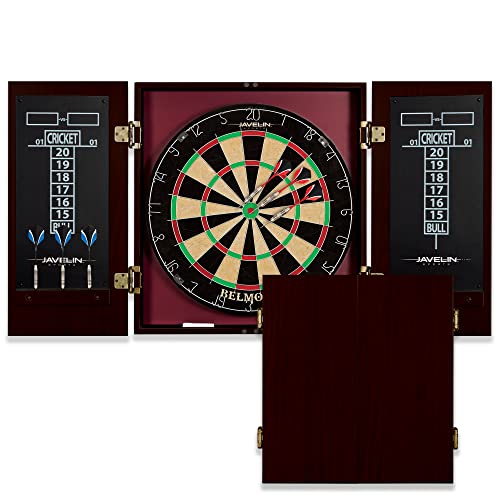
As an Amazon Associate, we earn from qualifying purchases. Product links are paid links; availability can change.
Turn the answer into a better game
Use the relevant tool or playing guide next instead of leaving the answer on the screen. You can play the Road to the Crown darts game, measure a lane with the setup calculator, or return to our dart boards homepage to compare board types and plan a complete setup.
Frequently asked questions
Are magnetic darts automatically safe?
No. They remain projectiles and damaged small magnets can present serious ingestion hazards.
Are soft tips safe for toddlers?
No. They can injure and include small parts; follow age ratings and supervise.
When can children use steel tips?
Only when mature enough, directly supervised, and permitted by the product and venue—not as ordinary toy play.
The Throw Lab verdict
Safety begins with format selection but depends on supervision, inspection, lane control, and secure storage. For most young beginners, point-free play is the correct compromise. Progress only when the child consistently follows throw-and-retrieve rules. Recheck the exact board manual and the rules used by the intended players whenever either could change the recommendation.