Quick answer: Steel tips are intended for sisal/bristle boards; soft tips are intended for electronic plastic-segment boards. Never use steel tips on an electronic board.
Board compatibility comes first
Steel tips belong on sisal or other boards expressly designed for them. On an electronic board, a steel point can damage segments and sensors and may void the warranty. Soft tips belong on electronic matrices. Although a soft point may sometimes stick in sisal, inconsistent penetration and bounce-outs make it a poor regular pairing. Follow the board maker's instructions whenever they are narrower than general advice.
Players who travel should identify the local format before buying several sets. Traditional steel-tip leagues and many pub matches use bristle. Soft-tip leagues and connected machines have their own equipment rules. A convertible 2BA-threaded barrel can be convenient, but changing the point also changes total weight and balance slightly.
Weight, trajectory and grouping
Steel-tip sets are commonly offered across a broad weight range. Electronic boards often specify a maximum total dart weight to protect the matrix; that limit varies, so read the manual. Do not infer that soft tip always means ultralight or that heavier automatically flies straighter. Release speed, barrel balance, flight and shaft also influence trajectory.
Compare like with like by throwing at least 100 scored darts with each legal setup over several sessions. Record grouping diameter or a simple score average, plus how often the dart enters at an awkward angle. One exceptional turn is weak evidence. The most useful weight is the one that lets you reproduce the same release without fatigue.
Safety and room suitability
A soft point is less likely to puncture a wall or skin than a steel point, which makes it the more forgiving choice for supervised family play. It can still injure an eye and can ricochet, so the lane must remain clear. Steel-tip play requires adult control, wall and floor protection, and a strict rule that nobody crosses the oche during a turn.
Room damage also differs. Steel points can mark plaster, wood and flooring after misses. Soft tips can snap, leaving fragments in a segment, and repeated impacts can still scuff nearby surfaces. A surround and a retrieval routine are sensible in either format.
Maintenance and cost over time
Steel points last, but their surface must remain suitable for the board. A burr or aggressive modification may pull sisal and accelerate wear. Slightly rounding a dangerously needle-sharp point and removing burrs is different from grinding deep grooves into it. Replace a bent or damaged point using the correct tool or a qualified service.
Soft points are consumables. Keep compatible replacements in the case, tighten them without over-torquing and use a broken-tip remover rather than digging at the matrix. Compare replacement availability before choosing an unusual thread. Flights and shafts wear in both formats, so their cost does not decide the comparison.
A use-case recommendation
Choose steel tip if the goal is traditional competition, checkout practice on regulation bristle, or a permanent adult game room. Choose soft tip if the destination is an electronic league, automatic-scoring cabinet or shared family area where reducing puncture risk matters. Do not choose one format because professional players appear to use it if your board and local games use the other.
For a first purchase, buy one modest compatible set and establish a baseline before changing components. Spend on consistent machining and replaceable standard parts, then tune grip and balance after the throw becomes repeatable. Compatibility prevents damage; measured practice determines preference.
Current equipment to compare
Use these verified listings as a starting set, then confirm the selected variation, dimensions, compatibility and current order terms on the retailer page. Inclusion is not a claim of hands-on testing or a universal ranking.

WINMAU Blade 6 Single Core Dartboard - Tournament Specification Board
Check availability on Amazon ↗Paid link · #CommissionsEarned
Accudart Match Pro Dartboard Cabinet Set with Auto LED
Check availability on Amazon ↗Paid link · #CommissionsEarned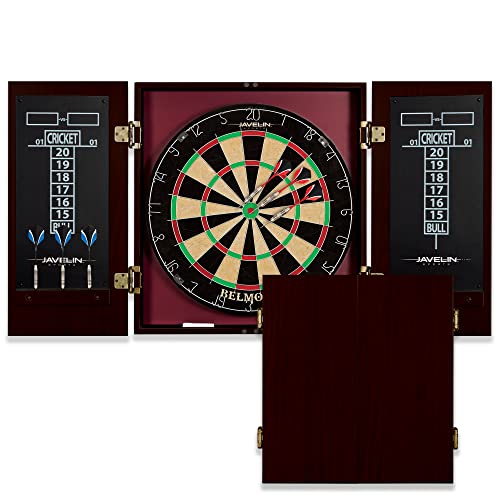
As an Amazon Associate, we earn from qualifying purchases. Product links are paid links; availability can change.
Turn the answer into a better game
Use the relevant tool or playing guide next instead of leaving the answer on the screen. You can play the Road to the Crown darts game, measure a lane with the setup calculator, or return to our dart boards homepage to compare board types and plan a complete setup.
Frequently asked questions
Can steel-tip darts be converted to soft tip?
Some barrels use a compatible threaded point system and can accept conversion tips. Confirm thread size, total assembled weight and the electronic board's limits before throwing.
Which type has more bounce-outs?
Either can bounce out for different reasons: steel tips may strike wire or a worn bed, while soft tips may hit a hole edge, use a damaged point or meet a loose segment.
Are soft-tip scores the same as steel-tip scores?
The basic wedges, doubles, triples and bulls are recognizable, but board geometry, bull rules, throw distance and league settings can differ. Use the rules for the actual competition.
The Throw Lab verdict
Steel tip is best for a sisal board and traditional steel-tip pathway; soft tip is best for an electronic matrix and the convenience or league format built around it. Treat compatibility as a safety and equipment rule, not a preference. Then select within the correct family by recording accuracy, comfort and entry angle across repeated sessions. A convertible barrel can reduce duplication for players who genuinely use both formats, but it does not erase board-specific weight limits or rule differences.