Quick answer: Straight barrels suit many grips, torpedo shapes concentrate mass toward the front and scalloped barrels provide a repeatable finger reference.
Straight barrels: maximum usable length
A straight barrel keeps a broadly similar diameter along much of its body. It gives front, middle and rear grippers multiple placement options and usually stacks efficiently in tight groups. That versatility makes it a sensible baseline when the player has not settled on finger position.
The tradeoff is less automatic indexing. Without a distinct contour, fingers may creep between throws. Rings, reference grooves or a small smooth section can solve that without changing the overall shape.
Torpedo and bomb profiles: concentrated mass
Torpedo barrels widen toward the front or middle and taper toward one or both ends. Compact bomb shapes concentrate much of their volume in a short body. Players who grip near the widest point may get a clear, stable reference and a feeling of forward momentum.
A wide center can occupy more space at the board and may push neighboring flights or barrels during close grouping. Rear grippers should check that the taper leaves enough controlled surface behind the balance point.
Scallops and tapers as finger references
A scallop provides a repeatable hollow for a finger or thumb. When it aligns with the natural grip, setup becomes quick and consistent. When it sits a few millimeters away from that position, the contour can force an artificial hold and create tension.
Rear tapers can improve release clearance for players whose fingers roll off the back. Front tapers may help close grouping. Neither feature guarantees performance; hand geometry and the direction of release decide whether the contour helps.
Measure shape with a blind routine
Mark neither set as the expensive or preferred one. Throw alternating blocks of 30 darts at a broad single target, then 30 at doubles. Record grip resets, obvious snags, group width and contact deflections. Ask whether the fingers land naturally before looking at scores.
Test with the same shaft and flight style where threads permit. A different flight can disguise a barrel-shape effect by changing entry angle.
Choose for grip, then refine texture
Front grippers often have several torpedo and tapered options; middle grippers can use almost any family; rear grippers usually need sufficient usable length behind the balance point. These are starting hypotheses, not prescriptions. Photos cannot reveal how a contour meets a particular hand.
Once the profile releases cleanly, choose a grip level that remains controllable when hands are warm. Excess grip can catch the fingers just as too little can slip.
Account for board clearance and hand size
Throw at a large single until three darts group closely, then inspect how the second and third darts approached the marker. A broad bomb barrel may create more contact but can still work when the entry angle leaves the target open. A slim straight barrel creates physical room, yet that advantage matters only when the hand controls it. Count contact deflections over 100 darts rather than judging one crowded group.
Players with smaller hands should compare usable grip length and maximum diameter, not marketing categories such as youth or pro. Players with large fingertips may need a wider or longer reference area. Dimensions in millimeters help narrow candidates, but a borrowing session reveals whether the contour forces fingers together or lets them settle naturally.
Current equipment to compare
Use these verified listings as a starting set, then confirm the selected variation, dimensions, compatibility and current order terms on the retailer page. Inclusion is not a claim of hands-on testing or a universal ranking.

Dart Board Light, Bright LED Dart Board Lights with 3M Power Cord, Professional Dartboard Lighting Accessories - Black
Check availability on Amazon ↗Paid link · #CommissionsEarned
Accudart Vortex LED Surround - Tournament Style - 360 Degree Bright LED Lighting - Fits Traditional 18" Boards - Attaches Together in Minutes
Check availability on Amazon ↗Paid link · #CommissionsEarned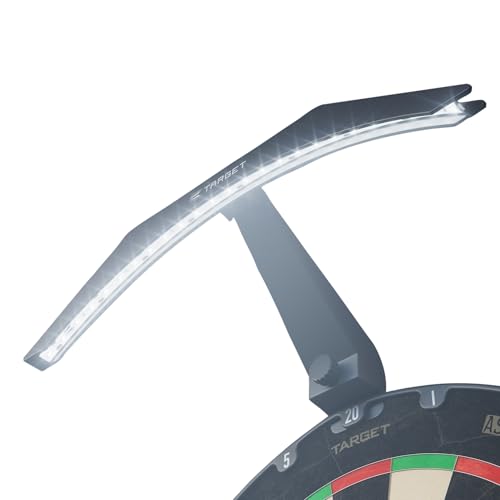
Target Darts LED Dartboard Light - Bright Dart Board Lighting | Extra Long 3m Cable | Securely Fits All Dart Boards | Easy Assembly | Professional Darts Accessories
Check availability on Amazon ↗Paid link · #CommissionsEarnedAs an Amazon Associate, we earn from qualifying purchases. Product links are paid links; availability can change.
Turn the answer into a better game
Use the relevant tool or playing guide next instead of leaving the answer on the screen. You can play the Road to the Crown darts game, measure a lane with the setup calculator, or return to our dart boards homepage to compare board types and plan a complete setup.
Frequently asked questions
What barrel shape is best for beginners?
A moderate straight barrel offers the most freedom while grip develops. A subtle reference groove can help repeat finger placement without locking the player into one position.
Are torpedo darts front weighted?
Many are, but shape alone does not prove balance. Point, drilling, material distribution and shaft assembly affect the center of mass.
Does a thinner barrel score better?
It can leave more physical room for grouping, but only if the player controls and releases it comfortably. A thin barrel that slips is not an upgrade.
The Throw Lab verdict
Select barrel shape by the grip you can repeat and the release that leaves the hand cleanly. Straight barrels are adaptable; torpedo and bomb profiles create a pronounced mass reference; scallops can index a finger precisely when positioned correctly. Test shapes with matching accessories and record ordinary grouping, reset time and snags. After shape is settled, tune grip texture and balance separately so you know which change produced the improvement. The hand’s natural placement should remain the final authority during selection.