Quick answer: Begin with a moderate, commonly available weight and prioritize a repeatable grip and release. Change weight gradually so you can identify what actually improves grouping.
Start with the board and rules
Check whether the listed weight describes the barrel alone or the complete dart. Retail conventions vary between steel-tip and soft-tip products. Tournament rules impose equipment limits, and electronic machines may set stricter limits to protect segments. The board manual and league rules outrank a generic buying guide.
A player crossing formats should weigh the fully assembled dart on a suitable scale. Adding conversion points, long shafts or heavy accessories can move a legal barrel beyond a machine's limit.
How weight changes the throw
A heavier dart can feel calmer in the hand and may require less release speed for a given path; a lighter dart often asks for a quicker, cleaner acceleration. These are tendencies, not laws. Two darts at the same weight can behave differently when one is front-loaded and the other center-balanced.
Watch effort and miss shape. If a lighter set repeatedly drops low late in a session, fatigue or insufficient speed may be involved. If a heavy set is pulled or released late, the player may be steering it. Do not diagnose from three darts.
Run a fair comparison
Test adjacent weights, not a dramatic jump. Warm up, then throw ten three-dart visits at a large target such as the 20 wedge with set A and repeat with set B. Reverse the order on the next day. Record total points, darts outside the wedge, grouping spread and perceived effort from one to five.
Repeat for at least three sessions. Keep grip location, shaft family and flight shape as similar as possible. Choose the setup with the tighter ordinary groups and lower effort, not the set that produced the single highest score.
Match weight to a developing technique
Beginners benefit from stability in equipment while learning a repeatable release. Constantly changing weight after every poor turn prevents useful diagnosis. Stay with the baseline long enough to see whether misses cluster high, low, left or right. A coach may spot a mechanical issue that new darts cannot solve.
Players with discomfort should stop and address it rather than masking pain with a different weight. Darts is repetitive; relaxed mechanics, sensible session length and medical advice where appropriate matter more than forcing a preferred specification.
Buying without creating a drawer of darts
Borrow from a teammate, use a shop trial area or buy one affordable set near the current weight before investing in premium machining. Standard replacement shafts and flights let you tune the setup cheaply. Keep a log of the complete configuration so a successful combination can be reproduced.
Once weight is settled, evaluate grip and balance separately. The goal is a reference setup—one dart you understand—not endless equipment rotation.
Recognize a false weight conclusion
A new set can appear better because its grip texture, balance point or fresh flights differ, even when weight receives the credit. To isolate weight, use closely related barrels or configure assemblies as similarly as practical. Alternate the order of sets and repeat on another day. If the advantage disappears when test order reverses, warm-up or fatigue probably influenced the first result.
Also compare misses, not only totals. One setup may create occasional very high visits plus many wild darts, while another produces a narrower dependable range. Match play often rewards the second profile. Record median visit score and the percentage of darts in the intended wedge alongside the average, then choose according to the player’s actual game and tolerance for variation.
Current equipment to compare
Use these verified listings as a starting set, then confirm the selected variation, dimensions, compatibility and current order terms on the retailer page. Inclusion is not a claim of hands-on testing or a universal ranking.

Dart Board Light, Bright LED Dart Board Lights with 3M Power Cord, Professional Dartboard Lighting Accessories - Black
Check availability on Amazon ↗Paid link · #CommissionsEarned
Accudart Vortex LED Surround - Tournament Style - 360 Degree Bright LED Lighting - Fits Traditional 18" Boards - Attaches Together in Minutes
Check availability on Amazon ↗Paid link · #CommissionsEarned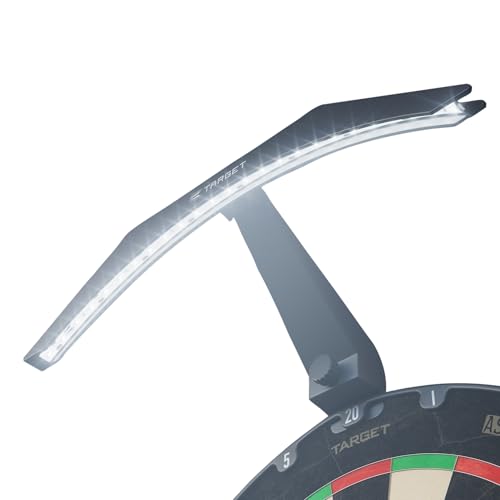
Target Darts LED Dartboard Light - Bright Dart Board Lighting | Extra Long 3m Cable | Securely Fits All Dart Boards | Easy Assembly | Professional Darts Accessories
Check availability on Amazon ↗Paid link · #CommissionsEarnedAs an Amazon Associate, we earn from qualifying purchases. Product links are paid links; availability can change.
Turn the answer into a better game
Use the relevant tool or playing guide next instead of leaving the answer on the screen. You can play the Road to the Crown darts game, measure a lane with the setup calculator, or return to our dart boards homepage to compare board types and plan a complete setup.
Frequently asked questions
What dart weight should a beginner use?
Start in the moderate range widely stocked for the correct board type, then compare only nearby weights. Board limits and a repeatable grip matter more than copying a professional.
Do heavier darts fly straighter?
Not inherently. They may feel steadier for some throws, but release, speed, balance, shaft and flight determine the actual path.
Should all three darts weigh exactly the same?
A matched set should be closely weight-matched. Large differences within a set undermine consistent feel; reputable manufacturers state tolerances or match barrels.
The Throw Lab verdict
Treat weight as a variable to test, not an identity to choose. Confirm the board and competition limits, establish a moderate baseline, compare adjacent weights across several recorded sessions and hold the other components steady. The winning setup is the one that produces repeatable ordinary groups with comfortable effort. After finding it, stop shopping for a while and practice; a stable reference reveals more about technique than continual equipment changes. Let sustained evidence, board compatibility and comfort make the final choice.