Quick answer: Larger flights generally add stability; smaller flights can produce a faster, flatter path. The best choice depends on throw speed, shaft length and entry angle.
Standard flights: a dependable baseline
The familiar broad standard shape offers substantial surface area. It can help the tail stabilize after release and is widely available in different thicknesses and materials. Beginners often benefit from beginning here because the response is predictable and replacements are easy to find.
More area also means more drag and more chance of incoming darts contacting an already planted flight. Flight protectors or molded systems may change durability and deflection behavior, so include the complete rear assembly in a test.
Slim, pear and kite shapes
Slim flights reduce surface area and are often paired with a quick, direct throw. Pear and kite shapes sit between common extremes, changing where area is distributed behind the shaft. Marketing labels vary, so compare actual outline and dimensions rather than the name alone.
A smaller flight may flatten a dart that currently stands too upright, but it can also expose release inconsistency. If the tail fishtails visibly, reducing stabilization further may worsen the problem.
Read the board-entry angle
Observe a normal group from the side only after everyone has stopped throwing. Tail-up, level and tail-down entries can all be workable if consistent and if the next dart has a clear route. The goal is not a textbook angle; it is a repeatable presentation that supports grouping.
Change flight shape before rebuilding the whole dart. Throw 60 darts with the baseline and 60 with the alternative on multiple days. Record entry angle, flight contacts and group spread.
Fit, thickness and replacement
Folded flights must open close to 90 degrees between wings. A misshapen flight introduces an uncontrolled variable. Punch systems, rings and molded flights can improve retention, while thicker material may last longer but alter mass slightly. Confirm the flight sits securely on the chosen shaft.
Replace split, creased or permanently warped flights as a matched set. Keeping one damaged flight because it still reaches the board makes comparison data noisy.
A simple tuning sequence
Start with the current barrel, point and shaft. Compare standard against one smaller shape using the same brand or material family. Keep the option that tightens ordinary groups and gives a manageable entry angle. Only then test shaft length.
Write the exact flight name, shape and thickness in a log. Visual memory is unreliable when several similar sets accumulate in a case.
Separate aerodynamic fit from durability
Run the performance test with fresh flights of each shape, then track durability separately over ten sessions. A molded flight may retain geometry longer, while a folded flight may be cheaper to replace and offer many shapes. Do not award accuracy points for surviving contact or durability points for one good score. The purchase decision can weigh both outcomes after each is measured on its own.
When grouping becomes tight, inspect flight-to-flight contact marks. Some players intentionally use a flight that guides incoming darts; others see frequent kick-outs. Count deflections that leave the intended wedge and compare them with clean contacts. This turns claims about stacking into evidence from the player’s entry angle, which is more useful than assuming a universal rear-end system.
Current equipment to compare
Use these verified listings as a starting set, then confirm the selected variation, dimensions, compatibility and current order terms on the retailer page. Inclusion is not a claim of hands-on testing or a universal ranking.

Dart Board Light, Bright LED Dart Board Lights with 3M Power Cord, Professional Dartboard Lighting Accessories - Black
Check availability on Amazon ↗Paid link · #CommissionsEarned
Accudart Vortex LED Surround - Tournament Style - 360 Degree Bright LED Lighting - Fits Traditional 18" Boards - Attaches Together in Minutes
Check availability on Amazon ↗Paid link · #CommissionsEarned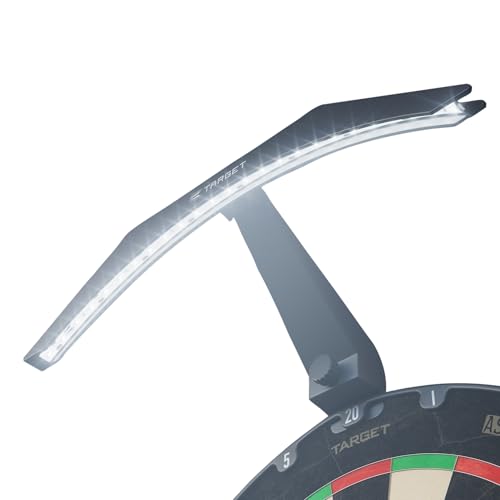
Target Darts LED Dartboard Light - Bright Dart Board Lighting | Extra Long 3m Cable | Securely Fits All Dart Boards | Easy Assembly | Professional Darts Accessories
Check availability on Amazon ↗Paid link · #CommissionsEarnedAs an Amazon Associate, we earn from qualifying purchases. Product links are paid links; availability can change.
Turn the answer into a better game
Use the relevant tool or playing guide next instead of leaving the answer on the screen. You can play the Road to the Crown darts game, measure a lane with the setup calculator, or return to our dart boards homepage to compare board types and plan a complete setup.
Frequently asked questions
Do dart flights change accuracy?
They can change stability, speed and entry angle, which may affect grouping. They cannot correct an inconsistent release by themselves.
Are bigger flights better for heavy darts?
Often they are a useful starting point because more area adds stabilization, but throw speed and balance matter. Test rather than relying on weight alone.
How often should flights be replaced?
Replace them when torn, deeply creased, unable to hold a square shape or repeatedly falling off. Usage and contact determine the interval.
The Throw Lab verdict
Use a standard flight as the control, then test smaller shapes only against a defined goal such as reducing a steep entry angle or excess drag. Keep barrel and shaft unchanged, count at least 60 darts per condition and repeat on another day. Favor the shape that produces tighter routine groups and predictable board entry, not the one that merely looks faster. Maintain square, undamaged flights so the chosen setup remains the setup you actually tested. Reliable geometry is part of reliable flight.