Quick answer: Shaft length changes balance and flight behavior. Test one change at a time and judge grouping and board-entry angle, not appearance alone.
What length changes mechanically
Moving the flight rearward increases overall length and changes leverage behind the barrel. Depending on the throw, this may encourage a different tail angle or a slower-feeling correction. Shortening the assembly brings the flight closer and can create a more compact path, but may reduce the stabilizing leverage a particular release needs.
Material also affects the result. Two shafts labeled the same length can differ in mass, so a fair length comparison uses the same product family where possible.
Use entry angle as evidence
If darts enter at inconsistent angles, first confirm that shafts are straight, flights square and grip repeatable. Then film several normal turns from the side from a safe location. A consistent tail-up angle may provide a stacking route; an extreme angle that blocks the target may justify a length test.
Do not chase perfectly level darts as a universal goal. Professional setups enter in many orientations. Seek repeatability and usable space for the next dart.
Run an adjacent-length test
Throw ten visits with the current shaft, ten with the next shorter and ten with the next longer. Repeat the circuit rather than completing all throws with one option first; this reduces the chance that warm-up or fatigue decides the result. Score a broad target and note group width, contacts and entry angle.
Repeat on three days. Discard any trial in which a loose shaft or damaged flight changes mid-block. Small differences need more evidence than one 140 score.
Match length to grip clearance
A rear grip can crowd the shaft junction, making a smooth transition important. A front grip may be less sensitive to shaft feel but still reacts to the balance change. Finger contact with the flight during release is a clear sign that geometry or grip needs attention.
Use compatible thread sizes and do not force cross-threaded shafts. Keep spare shafts because a bent stem can imitate a technique problem.
Tune in the right order
Choose a comfortable barrel shape and approximate weight before refining shaft length. Next settle the flight shape, then revisit shaft length if entry angle remains undesirable. Changing all three together makes the result impossible to attribute.
Once selected, record brand, material and labeled length. Carry identical spares so a break during play does not force an untested setup.
Check stability after the first collision
A shaft can perform well in isolated throws but behave differently when darts group. For each length, throw 20 normal visits at one wedge and count rear-end contacts, flights knocked loose and deflections outside the target. Note whether a planted dart leaves a clear route above or below. This is more match-relevant than comparing three widely separated warm-up darts.
Inspect threaded joints after every block. Repeated loosening changes alignment and can be addressed with compatible rings or routine tightening, not excessive force. Aluminum and polymer shafts may differ in bending and replacement behavior, so keep material constant during the length test. Once a length wins, buy matching spares and verify they assemble to the same overall geometry.
Current equipment to compare
Use these verified listings as a starting set, then confirm the selected variation, dimensions, compatibility and current order terms on the retailer page. Inclusion is not a claim of hands-on testing or a universal ranking.

Dart Board Light, Bright LED Dart Board Lights with 3M Power Cord, Professional Dartboard Lighting Accessories - Black
Check availability on Amazon ↗Paid link · #CommissionsEarned
Accudart Vortex LED Surround - Tournament Style - 360 Degree Bright LED Lighting - Fits Traditional 18" Boards - Attaches Together in Minutes
Check availability on Amazon ↗Paid link · #CommissionsEarned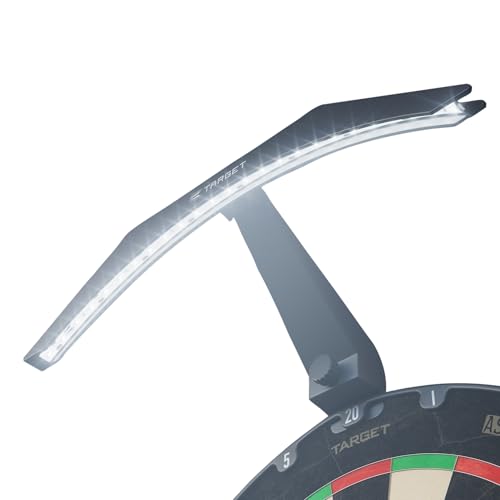
Target Darts LED Dartboard Light - Bright Dart Board Lighting | Extra Long 3m Cable | Securely Fits All Dart Boards | Easy Assembly | Professional Darts Accessories
Check availability on Amazon ↗Paid link · #CommissionsEarnedAs an Amazon Associate, we earn from qualifying purchases. Product links are paid links; availability can change.
Turn the answer into a better game
Use the relevant tool or playing guide next instead of leaving the answer on the screen. You can play the Road to the Crown darts game, measure a lane with the setup calculator, or return to our dart boards homepage to compare board types and plan a complete setup.
Frequently asked questions
What shaft length should a beginner use?
Begin with the intermediate or factory-supplied length, which provides a neutral reference. Compare adjacent lengths only after the basic throw is repeatable.
Do longer shafts make darts land tail-up?
They can change entry angle, but the direction is not universal because release, barrel balance and flight area interact. Observe your own groups.
Are shaft lengths measured the same by every brand?
Labels and whether threads are included can vary. Compare published millimeters and the actual assembled component, not only short or medium names.
The Throw Lab verdict
Shaft length is a fine-tuning tool. Start with the supplied intermediate reference, compare one step shorter and longer within the same material family, and record group spread plus board-entry angle across several sessions. The best length is the one that clears the fingers, keeps the dart stable and leaves useful room for following darts. Preserve the winning configuration with identical spares rather than assuming another brand's medium is the same. Document exact millimeters, material and brand, not just vague marketing labels.