Quick answer: Use a regulation board, precise bull and oche measurements, even lighting, a stable mount and enough clear space for an uninterrupted pre-throw routine.
Build around recognized target geometry
Select a full-size board whose scoring dimensions follow established competition specifications. Thin embedded or blade-style dividers reduce bounce-outs and keep scoring beds visually clean. A removable number ring is valuable because regular rotation distributes wear away from the heavily targeted 20 segment.
Install the centre bracket into sound structure and adjust rear bumpers so the face is stable and parallel. Rotate the 20 to twelve o’clock and verify the board cannot shift when darts are removed.
Measure like a tournament official
Use the player’s finished floor as the vertical reference and place the bull at 68 inches. Drop a plumb line from the playing face, then measure 93.25 inches horizontally to the front edge of the oche. Confirm the steel-tip diagonal at 115.375 inches.
A raised oche gives the foot a repeatable tactile stop and prevents unconscious creeping. If using tape or a mat, secure it and inspect alignment regularly. The line should be square to the board centre, not merely parallel to a nearby wall.
Create match-quality visibility
Illuminate the complete scoring area without shadows, glare or flicker. A circular fixture is convenient, but a balanced multi-light arrangement can work if each bed remains clear after darts enter. Judge brightness from the line rather than directly beside the target.
Keep the wall immediately around the board visually quiet. High-contrast posters, mirrors and bright screens can pull focus during a pressure finish. A scoreboard should remain readable without dominating the sightline.
Standardize the practice environment
Place chalkboard or electronic notation where scores can be recorded without crossing another player’s throw. Keep spare flights, shafts and a point tool nearby, while personal bags and drinks stay out of the lane. Practice with the same board orientation and floor position every session.
Establish match habits: wait behind the active player, retrieve only after all three darts, verify the score before removal and begin the next turn from the same foot reference. The environment should reinforce rules as well as mechanics.
Audit the lane before match practice
Run a monthly check using a written list: bull height, face-to-oche distance, diagonal verification, line squareness, board rotation, mount stability and light evenness. Record the date and any adjustment. This catches a shifted mat or settling bracket before weeks of practice reinforce a subtly altered release. League teammates can independently confirm close measurements.
Practice scoring procedure as deliberately as throwing. Announce the visit, allow close values to be verified before touching darts, and record the remaining score in a consistent order. Use a second scoreboard or app only as a check, not an excuse to stop learning subtraction and checkout routes. A professional environment trains decision-making and match rhythm as well as the physical motion.
If local competition uses a particular board family, practicing on comparable colors and wire geometry can reduce visual adjustment. Exact brand matching is less important than regulation dimensions and condition. Replace a board when hardened or badly worn beds stop holding sound darts consistently.
Current equipment to compare
Use these verified listings as a starting set, then confirm the selected variation, dimensions, compatibility and current order terms on the retailer page. Inclusion is not a claim of hands-on testing or a universal ranking.
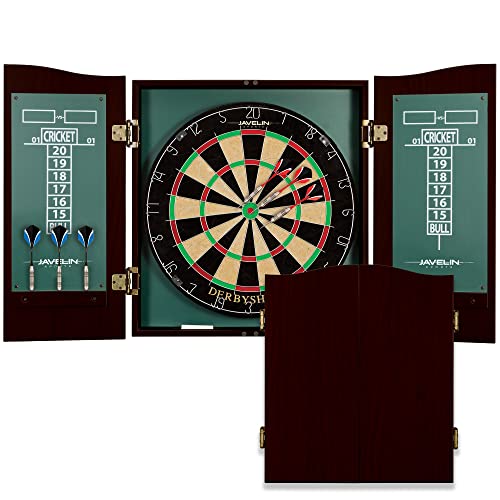
EastPoint Derbyshire Official Size Dart Board Cabinet, 6 Steel Tip Darts
Check availability on Amazon ↗Paid link · #CommissionsEarned
Accudart Armada Bristle Dartboard Cabinet Set, 18-Inch
Check availability on Amazon ↗Paid link · #CommissionsEarned
As an Amazon Associate, we earn from qualifying purchases. Product links are paid links; availability can change.
Turn the answer into a better game
Use the relevant tool or playing guide next instead of leaving the answer on the screen. You can play the Road to the Crown darts game, measure a lane with the setup calculator, or return to our dart boards homepage to compare board types and plan a complete setup.
Frequently asked questions
What makes a dartboard professional?
Regulation scoring geometry, durable sisal, thin dividers and stable mounting matter most. Professional practice also depends on correct height, distance and lighting.
Do I need a raised oche at home?
It is not essential, but it provides a repeatable physical boundary and better matches many competition venues. A precisely placed floor line can still be valid.
Should a professional board be rotated?
Yes. Move the removable number ring and rotate the board regularly so concentrated practice does not destroy the 20 bed prematurely.
The Throw Lab verdict
Professional-style practice comes from repeatable conditions: a regulation board, exact bull and oche placement, stable mounting, clean lighting and disciplined scorekeeping. Add a raised line and quiet visual background if the room permits, but never trade precision for décor. Rotate the board and inspect the lane routinely. When every setup variable stays fixed, changes in grouping and finishing reflect the player rather than a moving target or inconsistent stance position. An occasional written audit protects that consistency as equipment and flooring gradually settle.