Quick answer: Use resilient backing, isolate the mount from the wall where safe and add surrounding soft materials. Shared-wall vibration often matters more than airborne sound.
Diagnose the noise path
Listen in the adjacent room while another person throws. A sharp local click suggests airborne sound; a dull thud carried through framing points to structural vibration. Rattling doors, scoreboards or lighting identify loose accessories rather than the board material itself.
Test one temporary change at a time, such as holding cabinet doors firmly or adding a removable resilient pad behind the board. This avoids covering the room in acoustic products that do not address the dominant path.
Isolate board-to-wall contact
Purpose-built sound-damping backers and mounts place resilient material between the board assembly and wall. The layer must support the target evenly so its face stays parallel. Rubber isolation washers may help at fasteners when compatible with the bracket, but they should not reduce safe thread engagement.
Avoid thick household foam that compresses unpredictably or lets the board bounce. Any modification must preserve secure anchoring and access for rotation. Recheck the bull height and oche if the face moves outward.
Control cabinet and accessory rattle
Fit soft bumpers where cabinet doors contact the case, tighten hinges and keep stored darts from vibrating against hard shelves. Secure light cables and scoreboards without putting clips in the miss area. A cabinet amplifies noise when broad panels resonate.
The board’s rear adjustment wedges or bumpers should make even contact. Rocking under impact creates both sound and inconsistent dart entry. Tighten only enough to stabilize the target without distorting the board.
Reduce echo and secondary impacts
Carpet, curtains, upholstered furniture and acoustic panels reduce reflections within a bare room. A dart mat also softens bounce-outs and foot movement. These treatments improve the sound inside the room even when structural thump remains the main complaint next door.
A surround catches misses more quietly than painted drywall or wood trim. Move fragile or resonant objects away from the target wall, and schedule play considerately when complete isolation is unrealistic in an apartment.
Measure improvement instead of guessing
Use the same player, darts and target bed for before-and-after comparisons. A phone sound meter cannot certify acoustic performance, but consistent recordings in the adjacent room can reveal whether a change reduced the dominant thump. Compare several impacts rather than one throw because contact with wire and different beds naturally varies. Ask the affected neighbor to judge the time and room where noise is actually disruptive.
Introduce changes in stages: stabilize rattles first, add resilient isolation next, then treat room reflections if necessary. This order is reversible and shows which expense helped. If damping makes the board springy or alters dart penetration, undo it and choose a system engineered to support the target. Lower sound is not a success when scoring conditions or mounting safety deteriorate.
Dart choice can alter the sound slightly: heavier darts and aggressive throwing may transmit more energy, while loose components add a separate rattle. Do not change a comfortable legal setup solely to chase silence, but tighten equipment and compare normal throws before purchasing more wall treatment.
Current equipment to compare
Use these verified listings as a starting set, then confirm the selected variation, dimensions, compatibility and current order terms on the retailer page. Inclusion is not a claim of hands-on testing or a universal ranking.
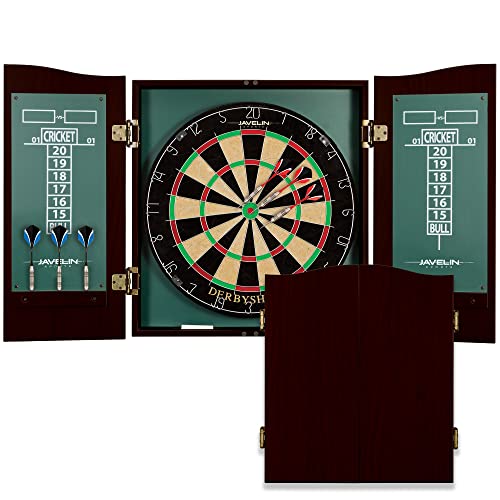
EastPoint Derbyshire Official Size Dart Board Cabinet, 6 Steel Tip Darts
Check availability on Amazon ↗Paid link · #CommissionsEarned
Accudart Armada Bristle Dartboard Cabinet Set, 18-Inch
Check availability on Amazon ↗Paid link · #CommissionsEarned
As an Amazon Associate, we earn from qualifying purchases. Product links are paid links; availability can change.
Turn the answer into a better game
Use the relevant tool or playing guide next instead of leaving the answer on the screen. You can play the Road to the Crown darts game, measure a lane with the setup calculator, or return to our dart boards homepage to compare board types and plan a complete setup.
Frequently asked questions
Will acoustic foam behind a dartboard stop neighbor noise?
It may reduce some high-frequency sound, but shared-wall complaints often come from vibration in studs. A secure resilient mounting layer is usually more relevant.
Are bristle boards quieter than electronic boards?
Bristle impact is generally subdued, while electronic segments and scoring sounds can be more audible. Wall coupling and cabinet construction can outweigh board type.
Does moving the board away from a shared wall help?
Often. A freestanding stand can break the direct structure-borne path, provided it is stable and placed in a safe lane with wall protection behind it.
The Throw Lab verdict
Quiet the source that actually carries: isolate structural vibration, stabilize the board, stop cabinet rattles and soften room reflections. Dense resilient mounting solutions are more useful for shared-wall thump than decorative acoustic foam alone. Keep every alteration secure, maintain the board’s height and reset the oche if its face moves. When physical limits remain, a freestanding location away from the shared wall and considerate playing hours can provide the largest practical improvement. Test each change from the affected room so perceived improvement reflects the real problem.